What you will do
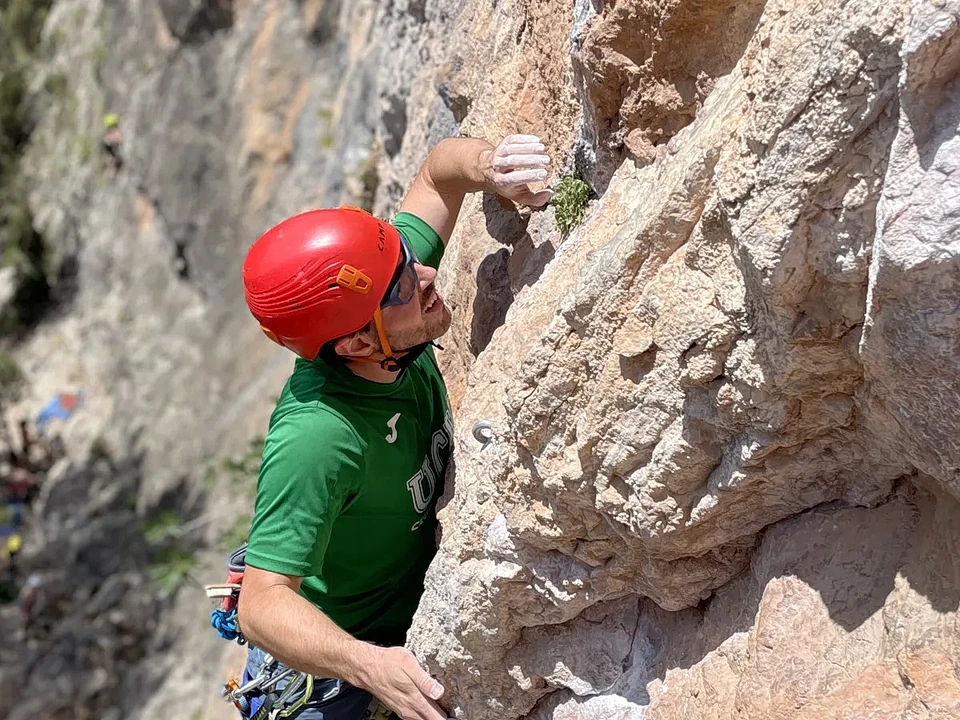
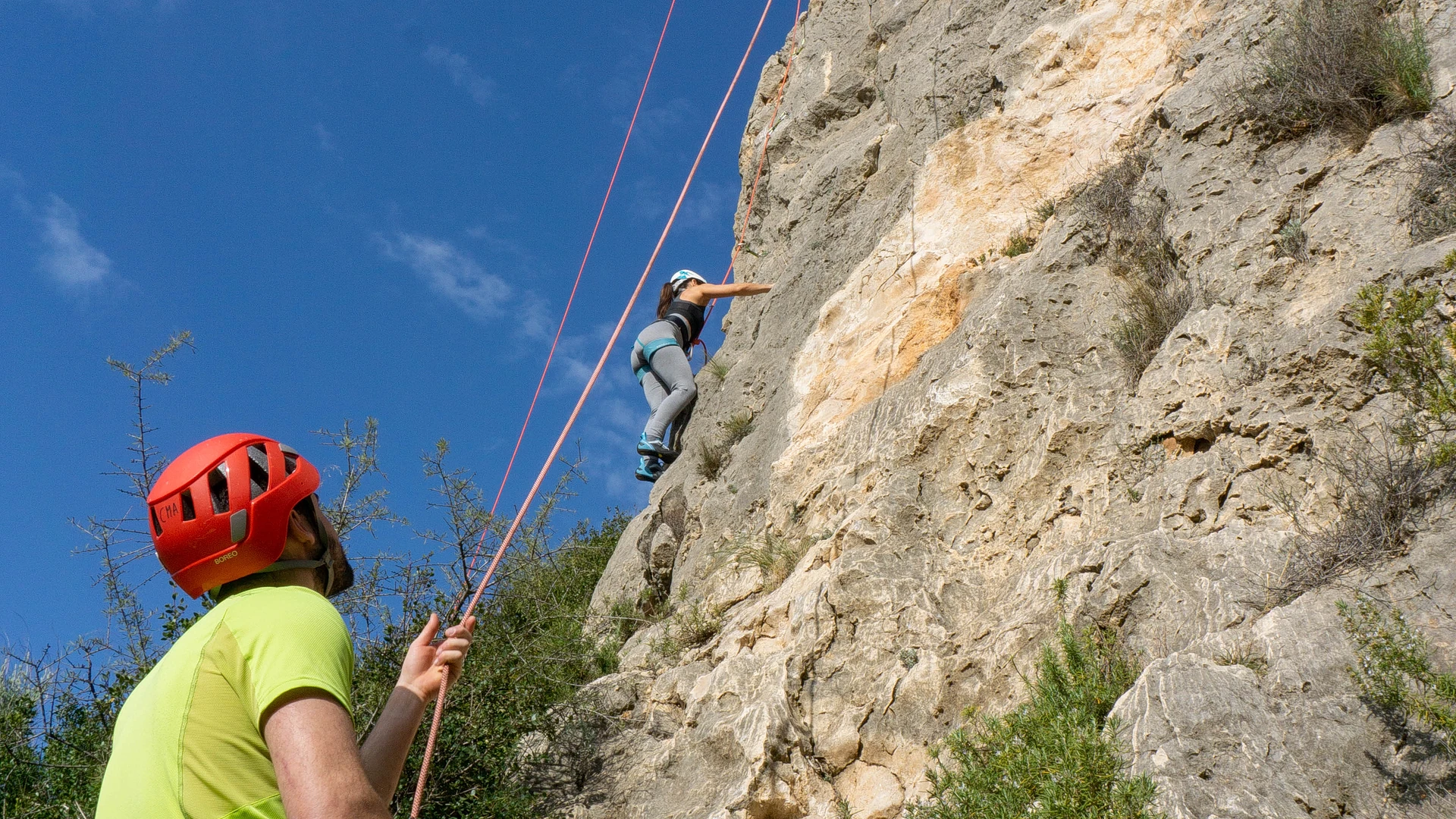
Start outdoor climbing at a Valencia crag chosen for the weather and your group. Learn equipment, partner checks, clear calls and assisted-braking belaying before climbing top-rope routes and developing efficient movement.
Short demonstrations lead into plenty of practice with harness fitting, figure-eight knot, system checks, belayer position and lowering.
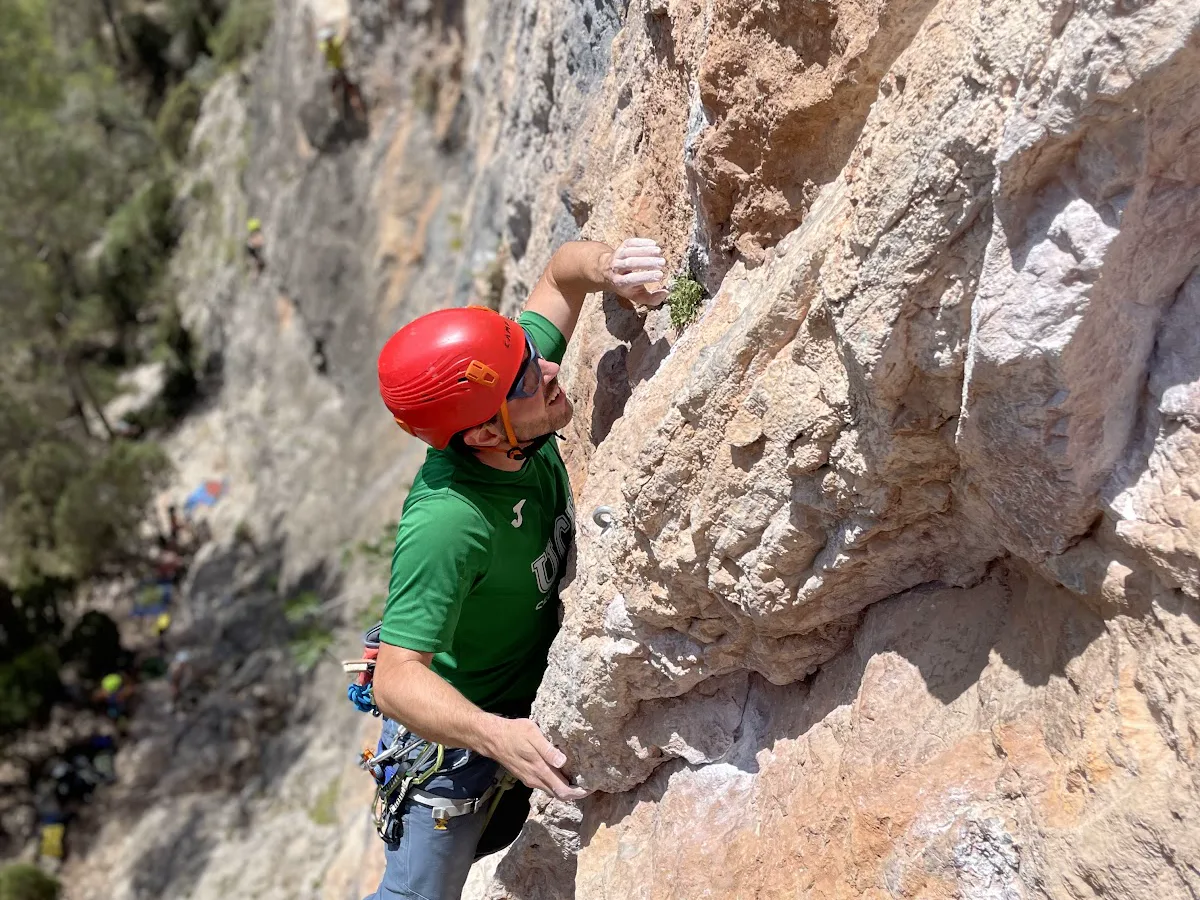
On the wall we focus on footwork, balance, body position and basic route reading. You leave understanding the system and the right next step for your climbing.
Course curriculum
- Equipment and partner checks
- Assisted-braking belaying and communication
- Top-rope climbing, footwork and balance
Key highlights
- First outdoor climbing experience
- Assisted-braking belaying
- Top-rope climbing
- Small group
What to expect on your first outdoor day
The day allows time to identify the helmet, harness, rope and belay device before attention turns to climbing. Fitting equipment, tying in and understanding the rope path provide a shared reference for the practice that follows.
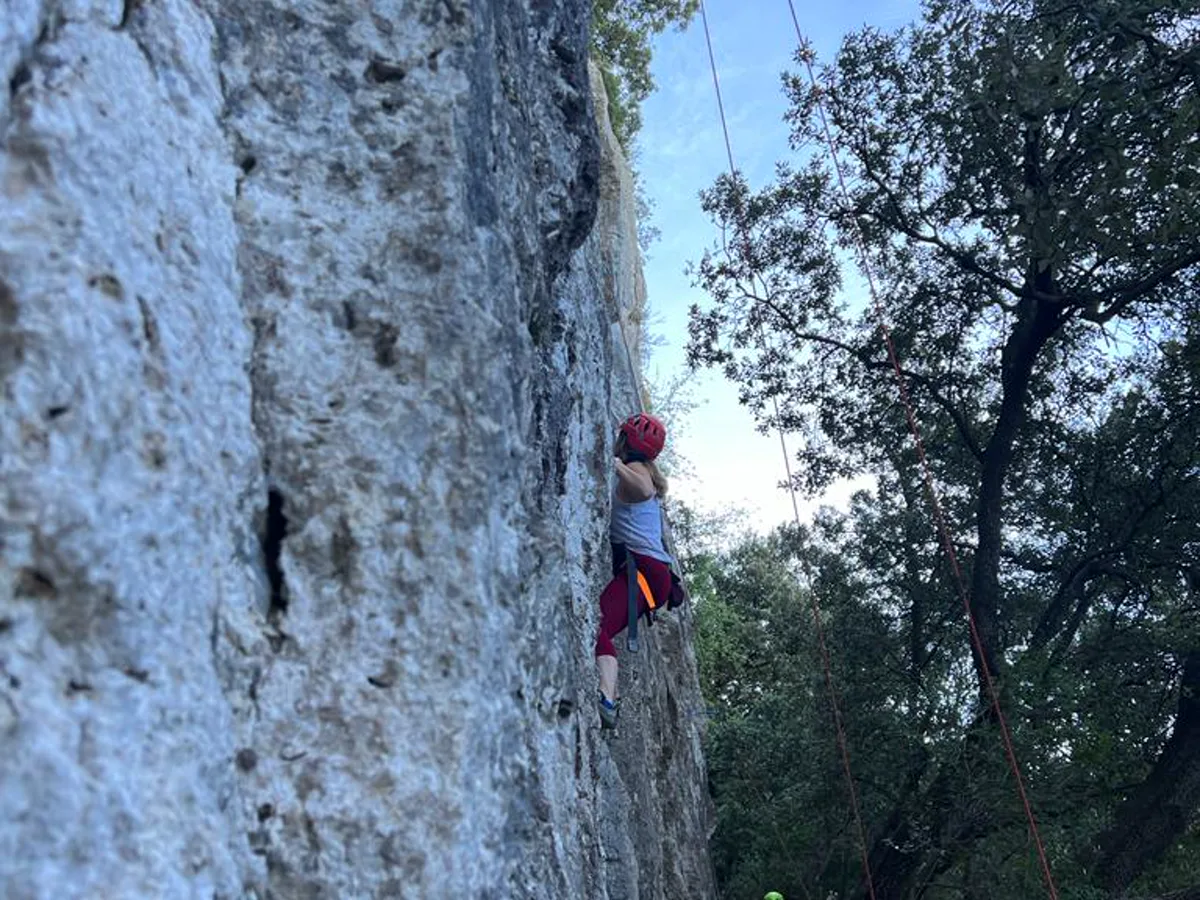
Climbing takes place on top rope and terrain selected for learning. Neither a high route count nor a particular grade is the aim: demonstrations, attempts and rests respond to the group so each explanation can be connected to genuine experience on rock.
Partner checks and clear communication
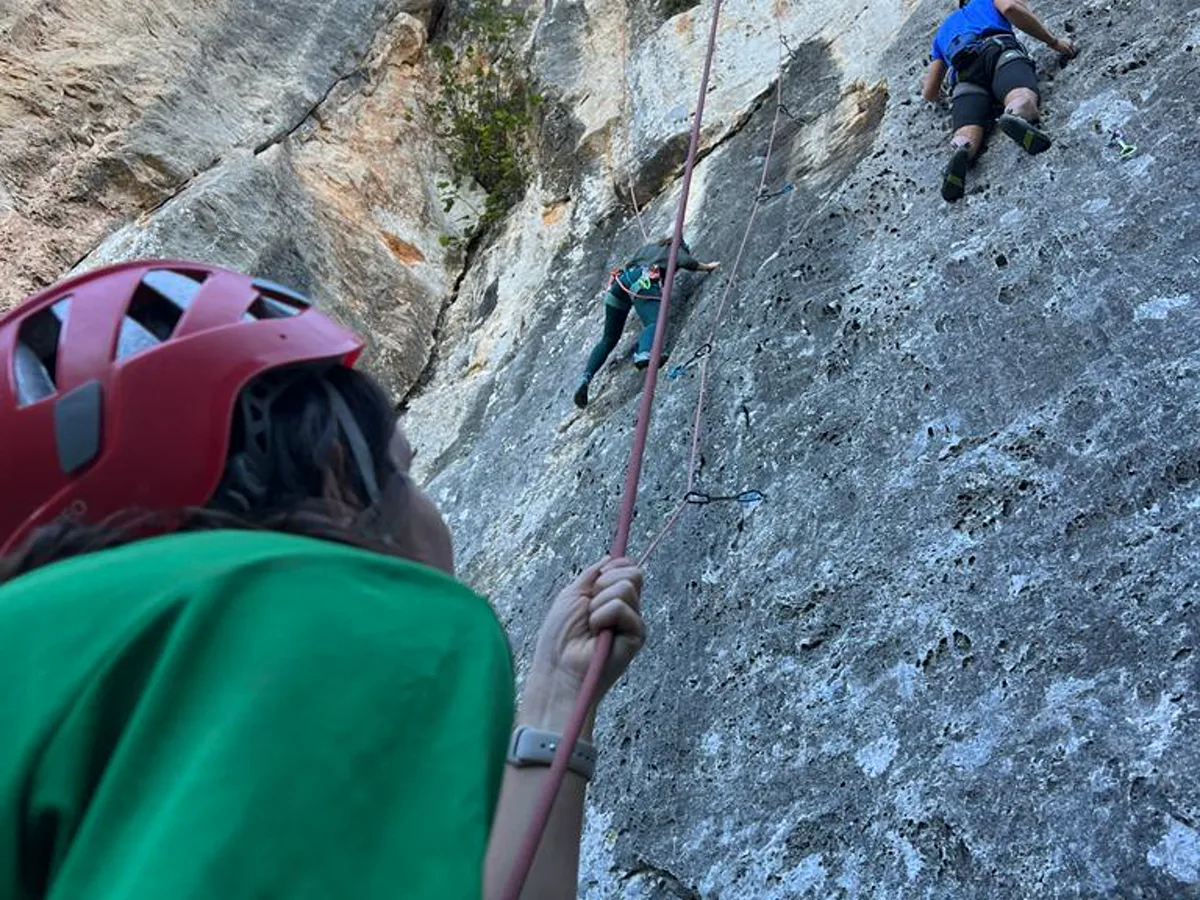
Climbing and belaying are treated as one shared task. Content includes checking harness, knot, carabiner and device, together with clear calls for taking in or giving rope, beginning to climb and preparing to lower.
Rather than reciting calls without context, the important habit is inspecting the system and confirming that both partners understand the same thing before acting. When a message is unclear, the appropriate response is to stop and clarify it.
Progress after the course
Afterwards, progress means repeating partner checks and belaying with suitable supervision until they are consistent. It also means climbing varied easy routes, recognising uncertainty and avoiding new responsibilities merely because one introductory day felt comfortable.
The course introduces the system and allows understanding to be observed during practice, but it does not promise complete independence in one day. Depending on demonstrated competence, the next step may be further accompanied top rope, more belay practice or later training before learning to lead.
FAQ
What should I practise afterwards?
Repeat checks, knot, belaying and lowering with suitable supervision, and gain movement experience on easy routes before taking on new responsibilities.
Will I be ready to lead climb?
Not necessarily. Leading adds clipping, rope management, falls and decisions that belong later in the progression, once top-rope climbing and belaying are already sound.