What you will do
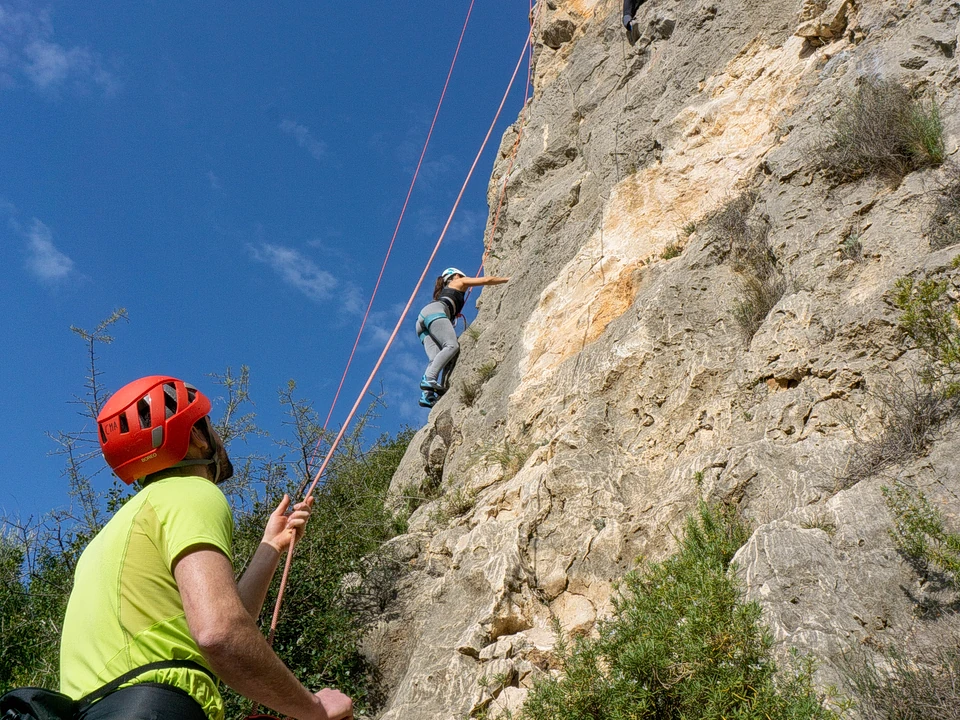
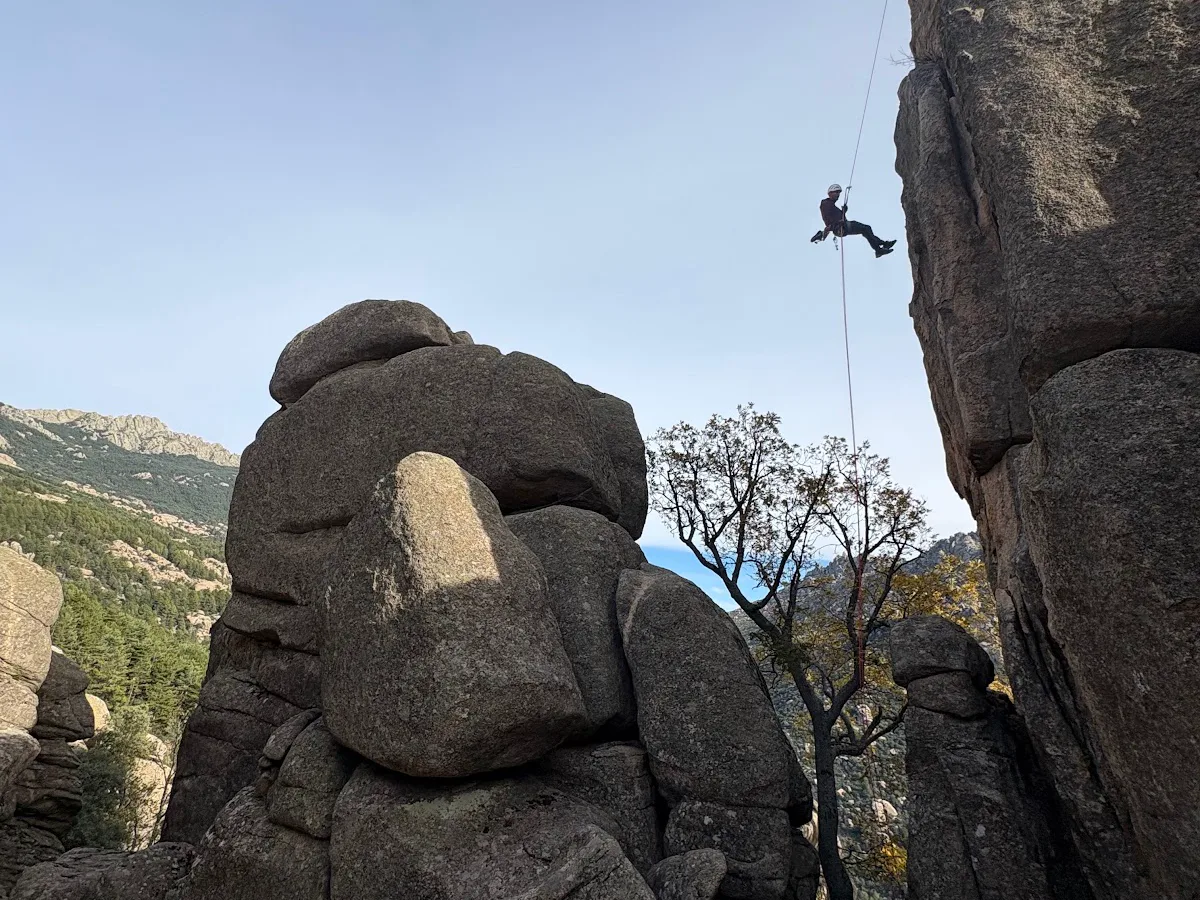
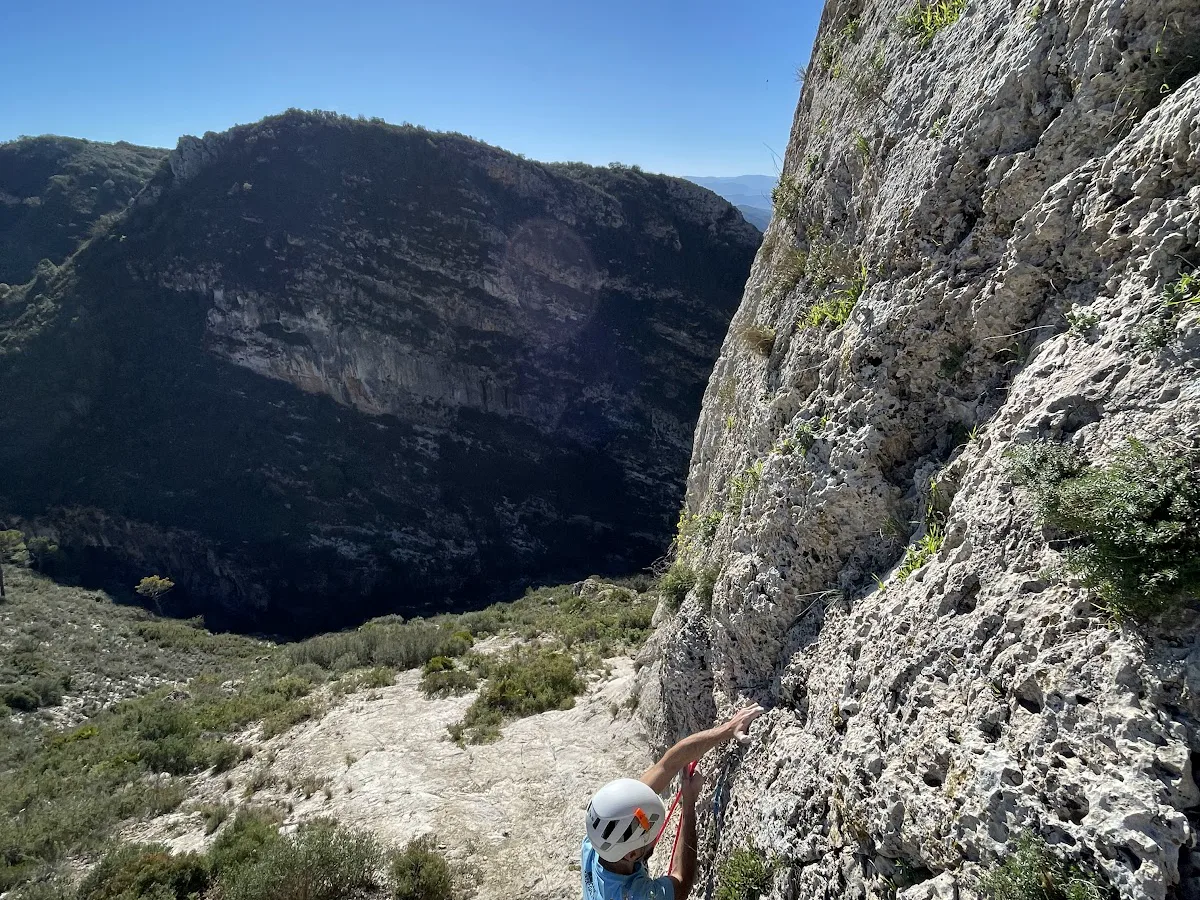
A Valencia multi-pitch course for climbers already confident in sport climbing. Practise equipped anchors, belaying a following climber, changeovers and descent as a clear rope-team sequence.
Before climbing, we review the topo, schedule, equipment, approach, retreat and backup plan. Systems are rehearsed first on controlled ground.
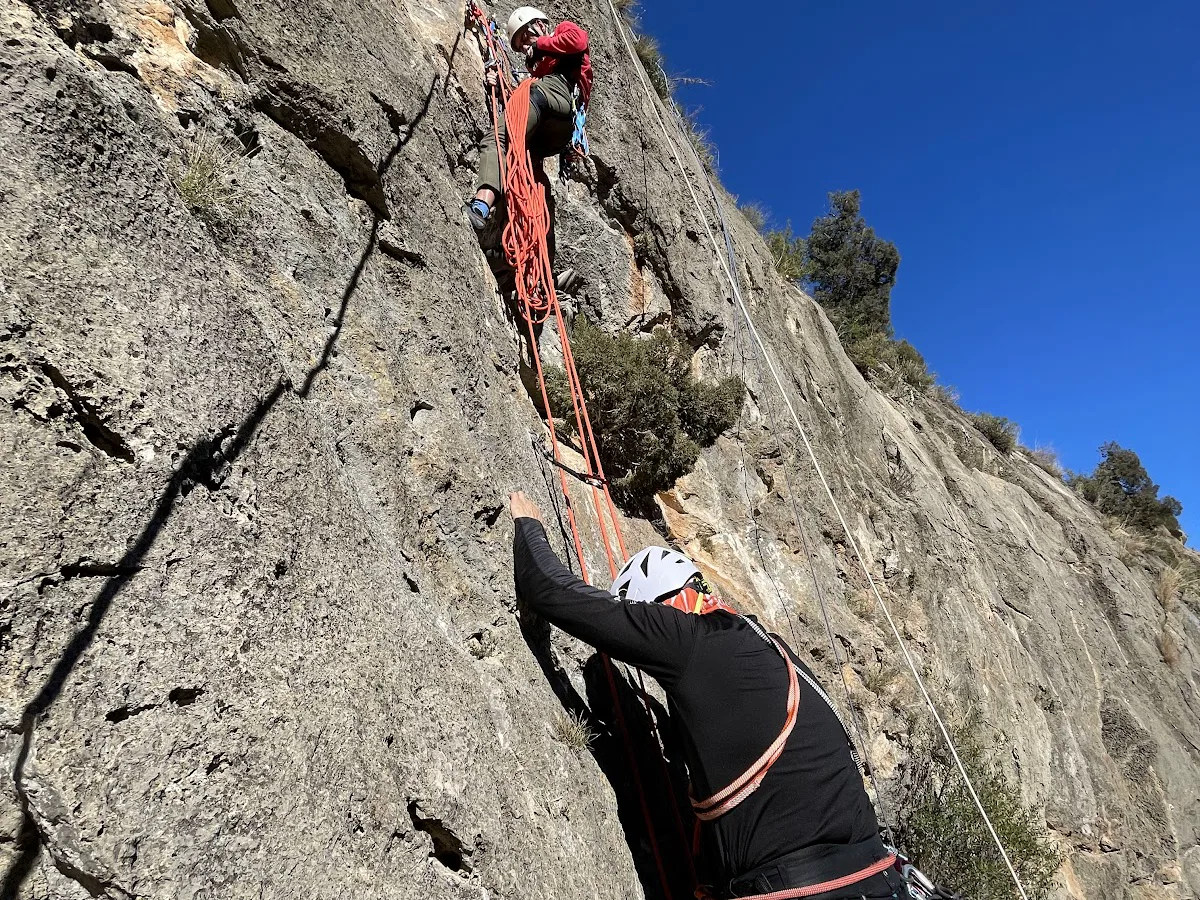
On the wall, communication, rope organisation and changeovers are linked together to prevent rushed or disorganised errors. Independence requires further progressive practice.
Course curriculum
- Planning and topo reading
- Equipped anchors and belaying a following climber
- Transitions, ropes, communication and descent
Key highlights
- Equipped anchors
- Rope management
- Efficient changeovers
- Descent planning
Foundations required before starting
Multi-pitch climbing adds tasks to sport leading: belaying a climber as they follow a pitch, organising a stance, changing roles and maintaining a descent plan. Confident sport leading and belaying are therefore required before attention turns to new systems.
Climbing grade alone does not replace those foundations. We review experience, familiarity with equipment and rope-team communication. Where an existing skill needs reinforcement, it is better practised in a controlled context before being added to a more committing vertical sequence.
From rehearsal to the wall
Systems are first practised in controlled terrain, as stated in the course outline: attaching at the anchor, setting up to belay the following climber, managing rope and preparing the changeover. This setting makes room for questions before height and fatigue are added.
Those actions can then be linked on an equipped wall suited to the group. The transition is not about reciting steps; it requires checking each setup, keeping the stance organised and understanding who is secured, who controls the rope and what task comes next.
What two days can and cannot provide
The course introduces planning, equipped anchors, belaying a following climber, changeovers and descent, then assesses how these connect in practice. Two days cannot reproduce every combination of wall, retreat, error, weather and rope-team dynamics.
Later consolidation should be gradual, on familiar objectives comfortably below the climber’s technical limit. Repetition on straightforward terrain, preparing alternatives and recognising gaps in experience are all parts of independence; completing the course alone does not demonstrate mastery of every route.
FAQ
Why are systems rehearsed before climbing?
Ground rehearsal resolves uncertainty without exposure or fatigue.
How should I consolidate afterwards?
Repeat on straightforward equipped terrain with conservative objectives and suitable partners. Increase commitment after consistent execution.